Side by side
| Day rate | Price per job | |
|---|---|---|
| Who carries the risk | Client | You |
| If you work faster | You earn less | You earn more |
| If it takes longer | Client pays more | You earn less |
| Client likes it because | Pays only for time used | Knows the cost up front |
| Best for | Repairs, old houses, unknowns | Clear jobs you have done before |
When a day rate fits
- Repairs and fault-finding where nobody knows what you will find.
- Old properties: hidden joists, rot, wiring from another age.
- Clients who keep changing their minds as the job goes.
- Working for another trade or a main contractor.
When a fixed price fits
Clear jobs you have done many times: a bathroom refit, a fence run, a rewire of an empty house. You know how long they take, and the client wants a number. If you are quicker than average, a fixed price pays you for it - on a day rate, being quick just means a smaller bill.
Work out your day rate first even when you give a fixed price. It is how you check the price is worth doing.
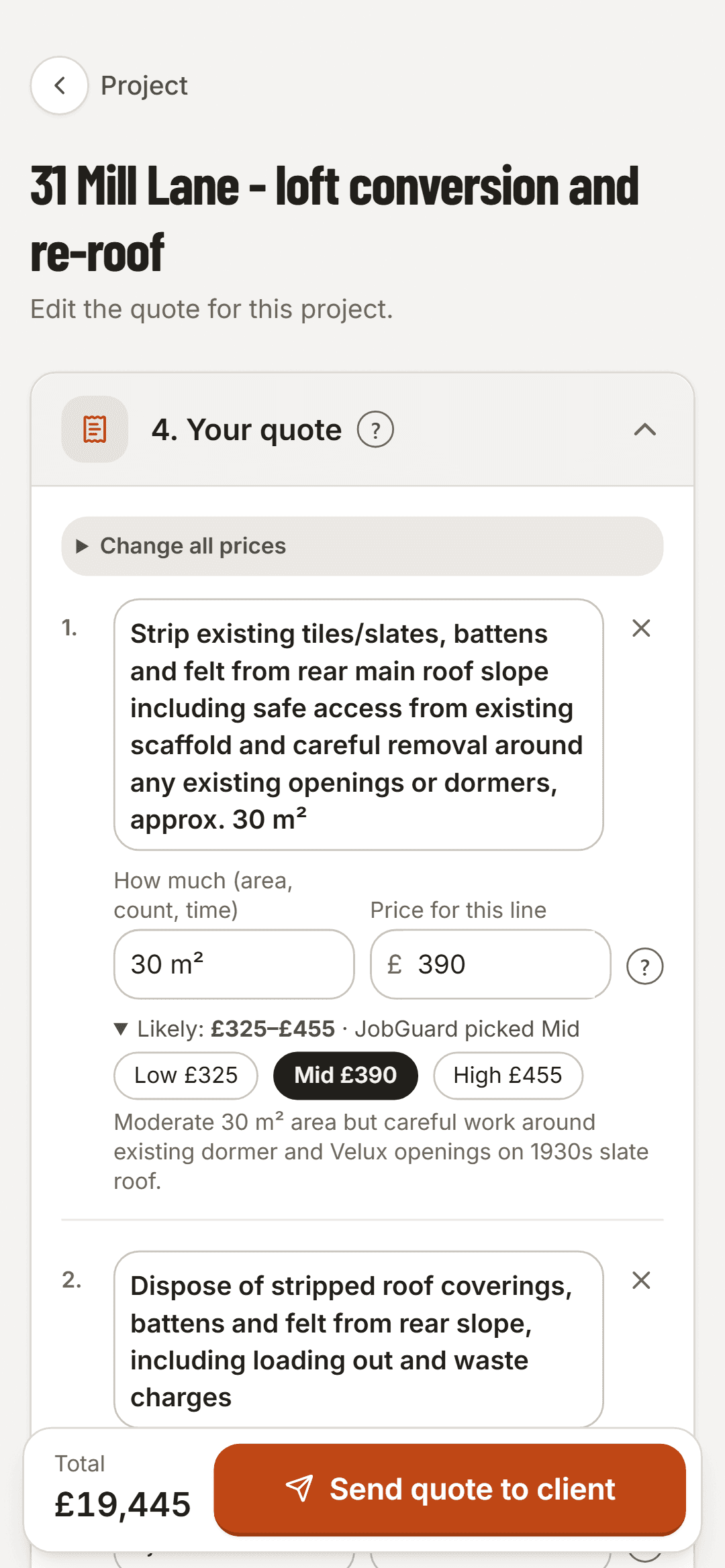
JobGuard suggests a price for each line from photos on site, using your own rate. You decide.
Try it freeNo card needed
Mix them
Give a fixed price for what you can see and put a day rate on the quote for anything else: hidden problems, client changes, extra work. The client gets a firm figure for most of the job, and you are covered when the floor comes up and the joists are gone.
Find your rate with the day rate calculator, and build up the price with how to price a job.